
Running a service-based business means balancing appointments, client messages, bookings and last-minute changes. When things get busy, administration can quickly take up more time than expected.
A simple client process can make a big difference. Intake forms help you understand your clients before they arrive, while feedback helps you learn from their experience afterwards.
Here are some practical ways to use both.
Why a Clear Client Process Matters
Clients should know what happens from the moment they decide to book until after their appointment.
A clear process helps you handle enquiries consistently, collect the information you need and give every client an obvious next step. It can also reduce unnecessary back-and-forth communication.
The goal isn't to make your process complicated. It's to make it predictable for both you and your clients.
Start With One Simple Booking Journey
Review your current booking process as if you were a new client experiencing your business for the first time.
Ask yourself:
- Is the booking link easy to find?
- Are my services clearly explained?
- Can clients easily see available dates and times?
- Do I collect important information before the appointment?
- Does the client know what to expect before arriving?
- Do they receive a reminder before their appointment?
You may quickly notice places where clients have to message you for information that could have been provided automatically.
Use Intake Forms Before the Appointment
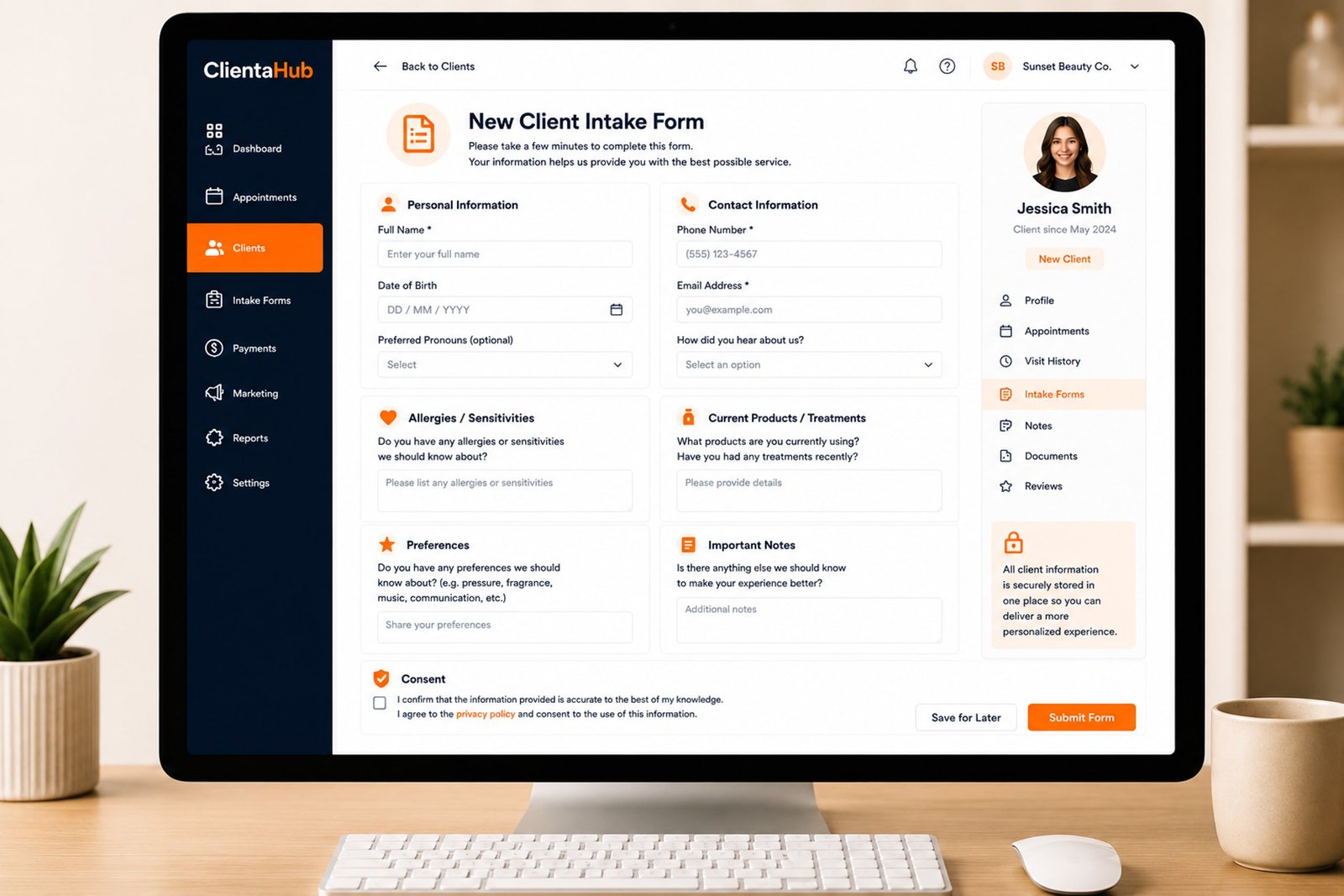
An intake form allows you to collect useful information before a client arrives.
The questions you ask will depend on the type of service you provide.
For example, you might ask about:
- Preferences
- Allergies or sensitivities
- Previous treatments or services
- Relevant products currently being used
- Specific requirements or concerns
- Anything else you should know before the appointment
Keep Your Intake Form Relevant
Avoid adding questions simply because you can.
Focus on information that will genuinely help you prepare for the appointment or provide a better service. A shorter, relevant form is usually easier for clients to complete than a long questionnaire.
Keep Useful Client Information Together
Collecting information is only useful if you can easily find it again.
Appointment history, private notes, intake answers and feedback are much more valuable when they remain connected to the client's record.
Before a returning client's next appointment, you can quickly review previous information instead of searching through messages, notebooks or separate documents.
Over time, this also gives you a clearer picture of the client's preferences and history with your business.
Ask for Feedback After the Appointment
The client journey shouldn't necessarily end when the appointment does.
Feedback gives clients an opportunity to tell you about their experience and can help you understand what is working well and where improvements may be needed.
Keep Feedback Simple
You don't need a long survey.
A few useful questions might include:
- How was your experience?
- Were you happy with the service?
- Is there anything we could improve?
- Would you recommend us to someone else?
Keeping the process short makes it easier for clients to respond.
Turn Feedback Into Small Improvements
Collecting feedback is only the first step. The real value comes from paying attention to patterns.
One negative comment doesn't necessarily mean you need to change your entire process. But if several clients mention the same issue, it may be worth investigating.
For example, if clients regularly say they weren't sure how to prepare for their appointment, you could improve the information provided after booking.
Small changes like this can gradually improve the overall client experience.
Connect the Whole Client Journey
Intake forms and feedback work particularly well when they're part of the same process.
A simple journey might look like this:
Client books → completes intake information → receives a reminder → attends the appointment → provides feedback
Instead of treating each step as a separate administrative task, connecting them creates a more organised experience for both the business and the client.
Small Systems Create Breathing Room
You don't need to change everything in one day.
Start with the part of appointment administration that takes the most time each week.
Maybe you're constantly answering the same questions before appointments. Perhaps you're searching through old messages for client information. Or maybe you rarely know how clients felt about their experience after they leave.
Choose one problem, improve the process around it and observe what changes.
Then move on to the next one.
How ClientaHub Can Help
ClientaHub helps service businesses manage the client journey in one place.
Online booking, client records, intake information, appointment reminders and feedback can stay connected, making it easier to prepare for appointments and keep track of client information without relying on separate messages, notebooks and tools.
The aim is simple: spend less time managing appointment administration and more time delivering a great experience to your clients.
Ready to Simplify Your Client Journey?
Explore ClientaHub and see how bringing your bookings and client information together can make your day-to-day work more organised.